The Aircraft Never Stops. What Happens When Passengers Can’t See It?
When passengers take their seats on an aircraft, they usually notice only the cabin crew’s smile, the sound of the doors closing, and the runway outside the window. Few realise that just minutes before boarding, someone was underneath the aircraft with a flashlight, checking the brakes and landing gear or topping up the engine oil. Mechanics like Michal K. from the Slovak company Aeroengineers International (AEI) make sure the aircraft is in a safe condition and, whenever possible, that the flight departs on time.
Michal does much of his work when the airport is at its quietest – late in the evening or early in the morning. As an aircraft mechanic, he specialises in two of the most common aircraft types operating in our region: the Airbus A320 and Boeing 737.
While passengers are disembarking and the cleaning crew is going through the cabin, Michal takes over the aircraft from the flight crew. The first thing he checks is the aircraft tech log – the aircraft’s technical logbook, which for most aircraft is now available electronically. Technology has finally moved on; until relatively recently, this was literally a book filled in by hand. Pilots record everything there, from a minor lighting defect to technical anomalies that occurred during the flight.
“Sometimes it’s something trivial. Other times, a small detail can point to a much bigger problem. We can’t afford to underestimate anything,” Michal explains.
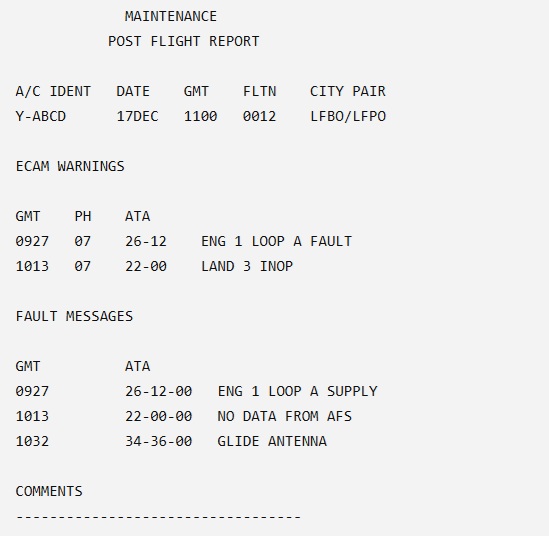
If he is working on an Airbus A320, he may also print out the Post Flight Report. The Airbus system provides a detailed list of messages and system warnings recorded during the flight – data that an ordinary observer might never notice, but which a technician can immediately use when assessing the aircraft.
A Routine That Must Never Become Routine
Michal opens the maintenance manual on his laptop and follows the prescribed procedure step by step. Every task has its own chapter, and every component has its unique identification. Even if he replaces an “ordinary” light bulb, he must record exactly which maintenance manual procedure he followed. This is accompanied by the relevant certification, signature and stamp.
Only then can the next pilot trust that the aircraft is ready.
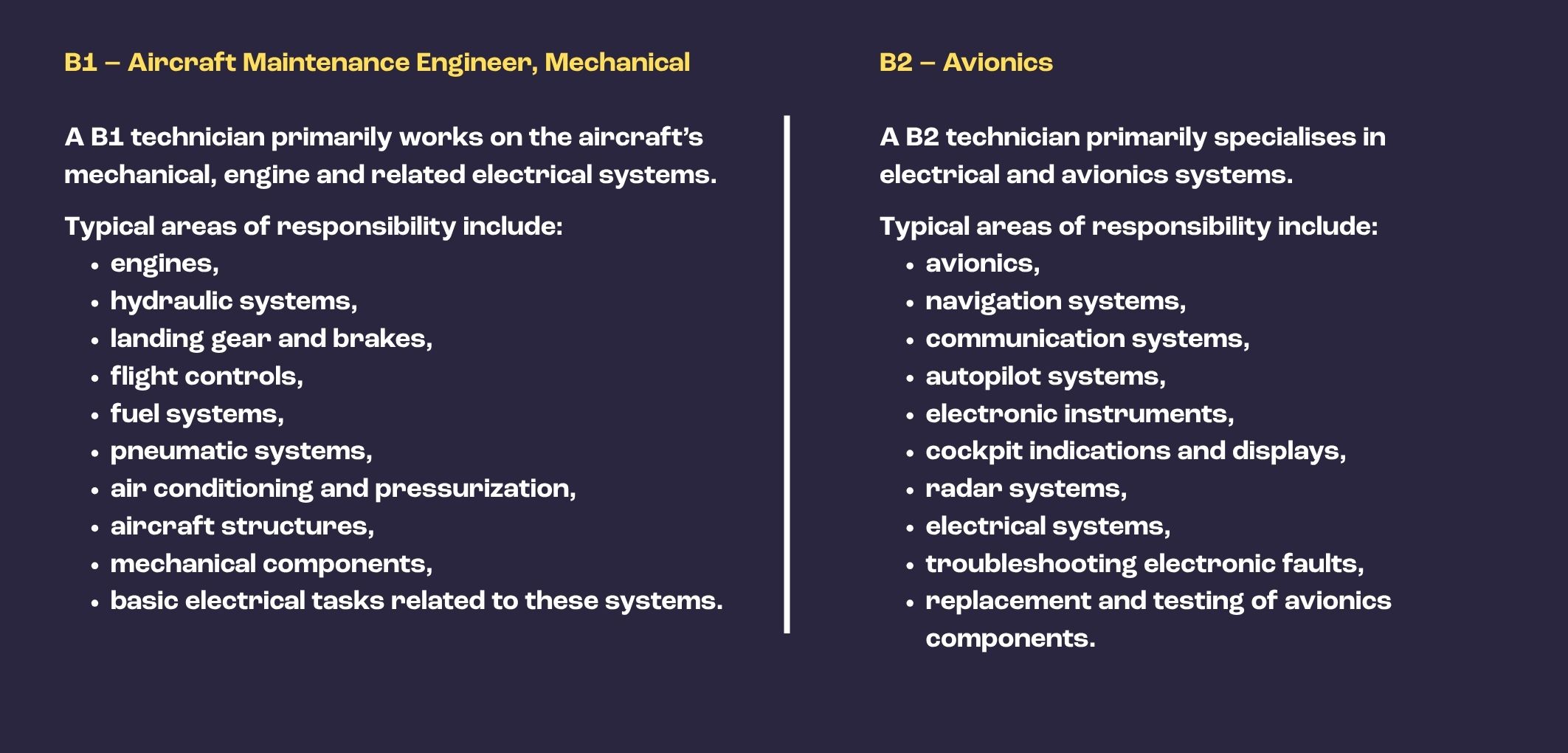
Before departure, however, there is one crucial step: confirmation that everything complies with the applicable requirements – the CRS, or Certificate of Release to Service. This is the mechanic’s confirmation that the required maintenance has been completed and the aircraft is released back into service. At that moment, the signature of an appropriately licensed B1 or B2 certifying staff member carries personal responsibility for the work being certified.
“That signature isn’t just a formality. There is a real person behind that name,” Michal says.
There is often less than an hour and fifteen minutes between an aircraft’s arrival and its next departure. Around half an hour may be taken up by baggage handling, refuelling and cleaning. Then passengers start boarding again. Technicians are therefore literally working against the clock.
To minimise delays, aircraft operations are governed by a Minimum Equipment List (MEL), which specifies certain defects under which an aircraft may continue to operate for a defined period, subject to prescribed conditions. This allows some defects to be rectified later, when more time, the necessary parts or specialised tools are available.
Depending on the category and nature of the defect, rectification may be deferred for a specified period. Some less critical defects can remain deferred for an extended period, while other defects do not permit another flight at all – and it does not necessarily take an engine failure to keep an aircraft on the ground.
It may surprise you that something as small as a missing ashtray in a lavatory door can prevent an aircraft from being dispatched. Smoking on commercial aircraft has been prohibited for decades, yet the requirement remains for a very practical safety reason. What if someone secretly lights a cigarette and then throws the cigarette butt into a waste bin containing paper towels?
That is why the ashtray remains a required piece of safety equipment.
During a daily check, mechanics commonly top up oil, inspect lights, check wheel and brake wear, and visually inspect the condition of the aircraft structure. A daily check may take one mechanic approximately two hours, although several mechanics working together can significantly reduce the elapsed time.
Michal also appreciates ACARS – the Aircraft Communications Addressing and Reporting System – which can significantly improve preparation before the aircraft even lands. Among other functions, it enables operational and technical information to be exchanged between the aircraft and the ground. Depending on the aircraft and airline configuration, technical messages can be transmitted automatically, while the flight crew can also send information about a problem or request to teams on the ground.
“That means we can already be waiting at the stand prepared – with the tools and even the specific part we might need. Every minute counts.”
Not everything, however, can be resolved immediately. Manuals and approved operational documentation define exactly what is permissible and what exceeds the applicable limits. If, for example, a tyre is outside its allowable limits, the aircraft simply does not depart until the issue is rectified.
“You can’t cut corners when it comes to brakes or wheels. And a mechanic won’t sign something unless they are confident it is right,” Michal adds.
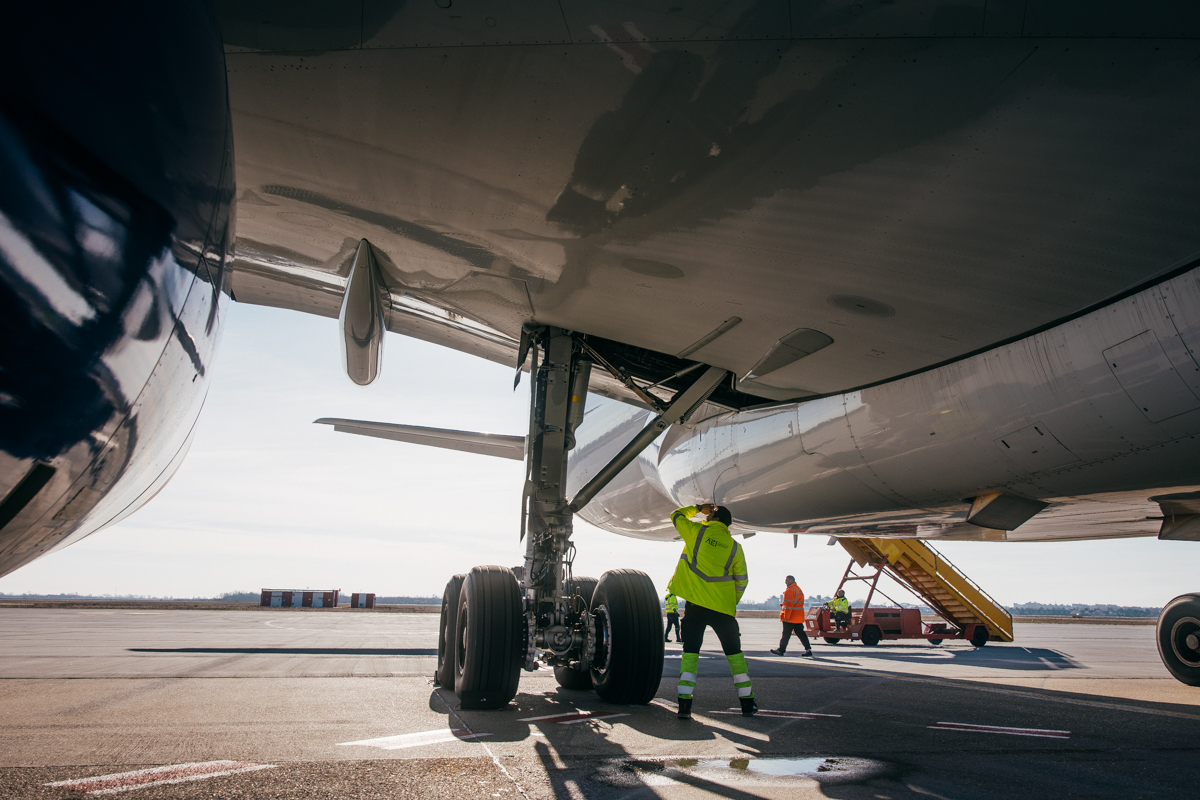
A large part of aircraft maintenance takes place directly on the airport apron – in winter, rain and strong winds. Hangars are generally used when the scope of maintenance requires the aircraft to be taken out of normal line operations for more extensive work.
And Then Night Falls
The final arrival of the evening opens a window for another series of checks. This is usually when the aircraft remains on the ground for several hours, creating an opportunity for troubleshooting – a more detailed investigation and rectification of defects that can be deferred in accordance with the applicable maintenance and operational requirements and for which there was not enough time during the day.
The number of mechanics on a shift depends on the number of aircraft as well as the airline’s requirements.
But aircraft maintenance is not supported only by the person carrying the toolbox. Behind every mechanic stands an entire system involving dozens of other people. Production Planning coordinates manpower, maintenance activities and parts. The Training Department monitors licences, qualifications and their validity. Safety and Quality teams oversee compliance with the regulatory requirements established by the European Union Aviation Safety Agency (EASA).
Reliability and trust are precisely what the Slovak aircraft maintenance company Aeroengineers International (AEI) has built its reputation on. The company has become a maintenance partner for airlines including Austrian Airlines, Lufthansa, Wizz Air and Ryanair.
As AEI Technical Director Matej Pecek puts it: “In aircraft maintenance, time matters. But trust matters even more. That’s why we save one and build the other.”
Aircraft maintenance is not something you see from the departure hall. You cannot see it from seat 14A either. But every morning, when the gate opens and an aircraft takes off, behind that departure is a series of decisions, inspections and signatures.
And often, there is someone like Michal – who stayed behind under the apron lights after the final arrival of the evening, making sure that just a few hours later, the aircraft could safely take to the skies again.