Building More Than an MRO Company
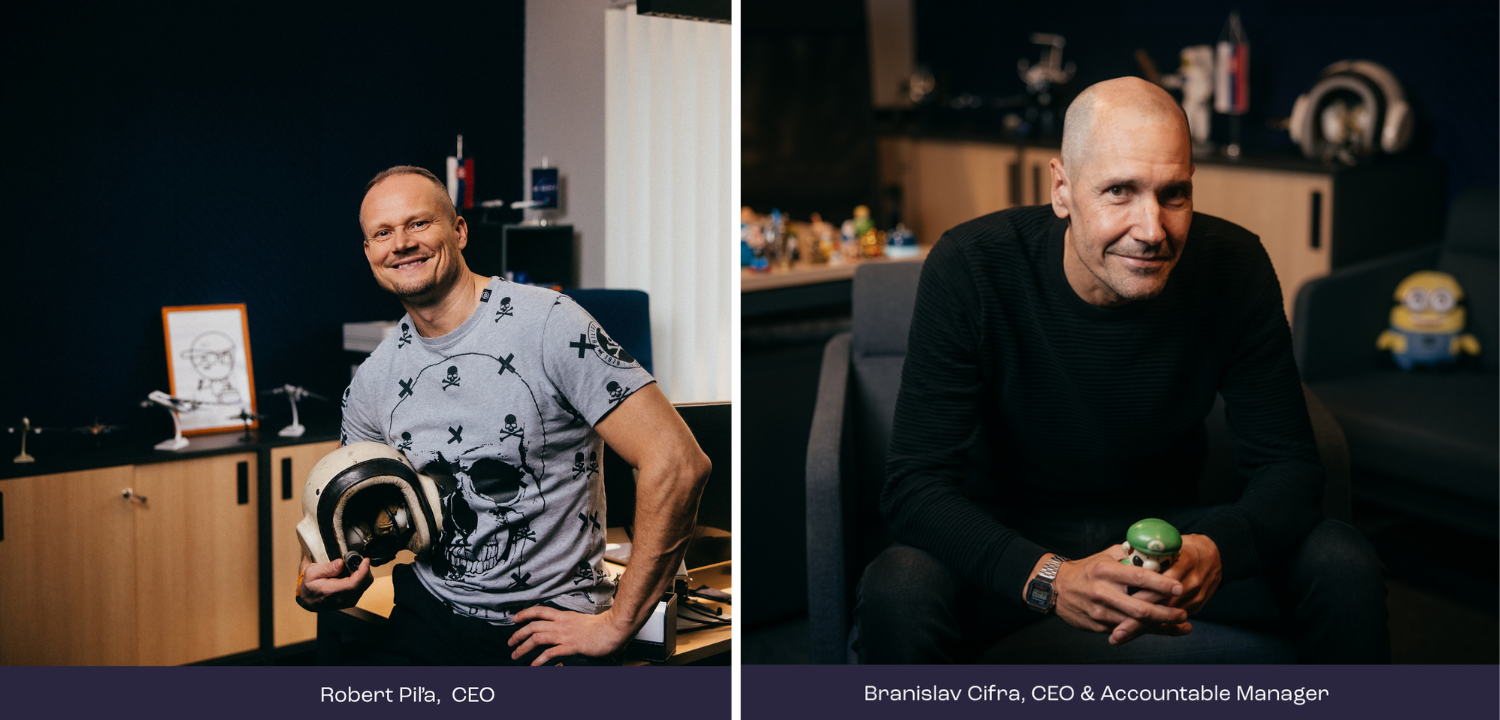
In this interview with Branislav Cifra (CEO & Accountable Manager) and Róbert Piľa (CEO), you’ll discover:
- Why quality and safety are the responsibility of every employee – not just the Quality & Safety Department.
- What Branislav Cifra took away from Good to Great and how it shaped AEI’s philosophy.
- Why AEI doesn’t aspire to be just another supplier, but a long-term partner to its customers.
- How the founders’ contrasting personalities have created a successful partnership that has lasted for nearly 30 years.
- Why the founders believe that technical expertise alone is not enough to build a successful business.
What were your beginnings in aviation like?
Braňo: Ever since I was a child, I wanted to be around aircraft. At first, I dreamed of becoming a pilot—just like many people who work in aviation today. However, when I graduated from secondary school in Trenčín, the pilot training programme was not opened that year, so I chose the path of an aircraft mechanic instead. I look back on those days very fondly because it was a fantastic environment—we were surrounded by aircraft, hangars, and experienced technicians every single day.
Robo: It was quite similar for me. I wanted to become a military pilot, so I enrolled in the CVO 430 programme at the Military Secondary School, specializing as an Aircraft Technician. The programme focused on aircraft maintenance, repairs, and technical inspections, giving students a comprehensive understanding of aviation engineering. My plan was to continue my military career as a pilot. However, after completing my aircraft technician training, I was informed that, due to the high cost of pilot training, there was no guarantee I would ever progress to a pilot position.
Your paths crossed at a very young age—you met in the military when you were just 18 years old. How did that happen?
Braňo: After graduating from school in Trenčín, I continued my studies at another military aviation school specializing in the maintenance of military aircraft. That was where I met Robo. After completing our military education, we were both assigned to the same air base in Malacky.
At that time, following the split of Czechoslovakia, Slovakia still had a strong military aviation sector. However, it gradually underwent major restructuring, aircraft types were phased out, and flight operations became increasingly limited. What had once felt like the reality of Top Gun slowly turned into routine and, eventually, frustration, as flying activities declined, experienced professionals left the military, and our vision of military aviation gradually began to fade.
Robo: That was a turning point for us. I left the military in 2003 because it had become clear that aviation was heading in a different direction and there was less and less room for the kind of work we wanted to do.
Braňo: I left a year later. By then, the job no longer fulfilled me. We were working on aircraft types that no longer inspired us, and everything had changed.

What happened after you left the military?
Braňo: For a while, our professional paths went in different directions. I moved into commercial aviation as an aircraft mechanic, while Robo entered the commercial sector through real estate.
Towards the end of 2009, our paths crossed again by chance, and in January 2010 we founded Aeroengineers International (AEI).
Robo saw an opportunity to invest, and I knew I couldn’t build something meaningful without the right partner. We agreed that we wanted to create our own company—a place where we would work alongside people who genuinely loved what they did and where we would strive to build an ideal environment in which quality would never be compromised and meaningful rules would always be respected.
On top of that, thanks to my first business venture—which unfortunately did not succeed—we still had an open door with Lufthansa Technik. We seized that opportunity and built AEI on both the experience we had gained and the lessons we had learned from our previous mistakes.
Robo: We never wanted to build a company that would be “for one-time use.” We wanted to create something that would continue to grow and thrive even without us one day.
The military also gave us two invaluable qualities: the ability to perform under pressure and a strong sense of teamwork. We often had to step in for different specialists—one mechanic was capable of working on several aircraft systems. That’s quite common in military aviation but much less so in civil aviation. That versatility eventually became one of our competitive advantages.
I made the translation sound natural for an international business audience while preserving the original meaning and tone.
What are the core values your business is built on?
Braňo: About a year after we started the company, we found ourselves facing the possibility of shutting down. Whether I liked it or not, I had to take a hard look at myself and understand why my first company had failed. I also realized that the situation our second company was in was entirely my personal responsibility.
That was when it truly hit me: if you have the authority to make decisions that affect an entire company, you must also take responsibility—not only for its successes but equally for its failures.
Until then, I couldn’t understand why the outcome always seemed to be the same. We started both companies with good intentions, yet both turned out very differently from what we had expected. That’s when I realized that managing a business requires far more than the technical perspective we had as aircraft mechanics.
So I began searching for answers. I started reading books and articles on management and economics, trying to understand what we were doing wrong.
Jim Collins and his book Good to Great had a profound impact on me, as did many other thinkers, including Peter Drucker, who is widely regarded as the father of modern management.
After reading their work, we came to a clear conclusion: passion, discipline, and working together would become the pillars of our company.
These are not just nice words. They guide how we select people for our team and how we make decisions every single day. Over time, we realized that the principles on which every company should be built are actually quite simple. The real challenge lies in putting them into practice.
It’s an ongoing journey of learning, experimenting, making mistakes, and improving. And if you persevere long enough, success eventually follows.
Robo: Braňo always says we’re looking for the right people—and it’s not just a cliché. Passion and the desire to do great work have to come from within. Discipline keeps you on course, and working together is what makes you part of a team. Character isn’t something people learn in a training course—you either have it or you don’t.

How would you summarize your vision in one sentence?
Braňo: To be a trusted and respected MRO partner that combines technical expertise with a human approach, balancing heart and reason—with a touch of playfulness, because business should have room for that too.
What motivates you to keep moving the company forward?
Braňo: We want to leave behind something meaningful—not just a company, but a community of people who share the same vision and understand that what they do creates value for customers, employees, and society as a whole.
We want our know-how, our team, our way of working, and the system we’ve built to remain in place. A system that continuously creates value for customers, employees, and the wider community. We don’t want the company to disappear simply because the two of us are no longer here one day.
People sometimes ask why that matters to us if we won’t be here ourselves. Our answer is simple: if the people who founded companies more than a hundred years ago hadn’t thought beyond themselves, none of us would enjoy the quality of life we have today.
We believe we owe something to the generations before us, and we also have a responsibility to contribute something to those who come after us. Perhaps that’s a little idealistic, but we’re both driven by what we genuinely believe is right.
Robo: Exactly. We’re looking for our successors—people who will one day take on the responsibility and continue building what we’ve started. They may even take it in a different direction, but with the same philosophy.
Braňo: And that philosophy is a far greater motivation for us than any specific revenue target or financial result. We believe business success is ultimately a by-product of a well-functioning system built on the right values. If a company consistently lives by those values, success should naturally follow.
How does AEI aim to stand out from other players in the market?
Braňo: Through our flexibility and determination to overcome challenges. We know how to adapt to our customers’ needs without ever compromising on quality. We also believe that every problem has at least one solution—and finding it is largely a function of the time and effort you’re willing to invest.
Robo: We don’t want to be just another supplier. We want to be—and we are—a true partner to our customers. We understand their needs and communicate with them not only as technical experts but also on a human level. I believe that’s something they genuinely appreciate.
What are you most proud of as a company in terms of expertise and services?
Braňo: That we built something from scratch that now employs dozens of people, serves satisfied customers, and creates value for society.
It’s not about replacing an aircraft engine—that’s simply our job. What truly matters is the positive impact we’ve had on the people around us, on those who are part of our company, and on the communities where we operate.
Robo: AEI is like a watch—you remove one gear, and the whole mechanism stops. Fortunately, we have a team that sticks together. That loyalty and team spirit are reflected in the quality of everything we do.
How do you approach quality and safety at work?
Braňo: Like any company—not only in our industry—we have strict control processes in place. At the same time, it’s important to emphasize that quality and safety are everyone’s responsibility, regardless of their role within the company.
It’s not just about having control processes; it’s about personal accountability. Sometimes a decline in quality happens as a chain reaction. Someone whose role is only indirectly related to a process overlooks their part, which creates additional work for someone else. Due to time pressure, that person may then overlook something that directly affects the quality of the service we provide to our customers.
Our control processes are essentially the framework and boundaries of our system—they provide the structure within which we all operate.
Equally important is working with the right people. We strive to reward them fairly and place them in positions where they can succeed. In many ways, it’s the same principle as our business success: it is the outcome of a system built on values that guide how people behave within it.
Without the right people, achieving quality and safety is extremely difficult. Thanks to our pillars, principles, and values, we know we can rely on our employees.
Robo: Quality and safety are two sides of the same coin. One simply cannot exist without the other.

What do you look for in the people you hire?
Braňo: For us, character is the most important quality. Technical expertise can be learned, but attitude and values cannot.
We’re proud to have people with diverse educational and professional backgrounds on our team. What truly brings us together is a shared set of values and the same mindset. Very often, that’s far more important than formal education.
Robo: I’d just add that we’re also looking for people with genuine passion for their work and the desire to do things properly. Most importantly, they need to genuinely identify with our philosophy—without that, it simply doesn’t work.
What advice would you give to a young person considering a career in the MRO industry?
Braňo: Stay curious. Ask questions. Observe. And never settle for mediocrity.
Always strive to build a better world, even though perfection will never exist. If you become comfortable with mediocrity, things will only get worse. But if you keep aiming for excellence, you’ll continue improving the world around you.
This industry needs people with open minds and genuine passion for what they do.
And remember—work is work, and hobbies are hobbies. Also remember that money isn’t everything. If it were, every wealthy person would be happy.
Robo: Don’t be afraid to start from the bottom and learn from everyone around you. Creativity is valuable, but it must always go hand in hand with responsibility.
How do you support the development of your employees?
Braňo: Beyond training programmes, we give people trust and the freedom to grow professionally. When people feel trusted, they take ownership and continue developing.
We encourage open discussion and try to lead with less direction and more transparency, support, and motivation. In return, we expect the same level of openness and responsibility from our people.
Robo: We don’t want anyone to feel like just another cog in the machine. Everyone has the opportunity to grow, learn, and bring forward their own ideas, knowing they will be listened to with respect and implemented whenever possible.
Where would you like to take the company over the coming years?
Braňo: We want to expand into additional maintenance segments and further strengthen our international presence.
We’re launching operations in new destinations. Last year, we established a new operation in Norwich, United Kingdom, and in 2024 we became the majority owner of the Czech company HeliBuddy, which specializes in helicopter maintenance.
Robo: Alongside our expansion, we want to preserve our personal approach and strong team spirit. That’s what truly sets us apart from large, impersonal corporations.
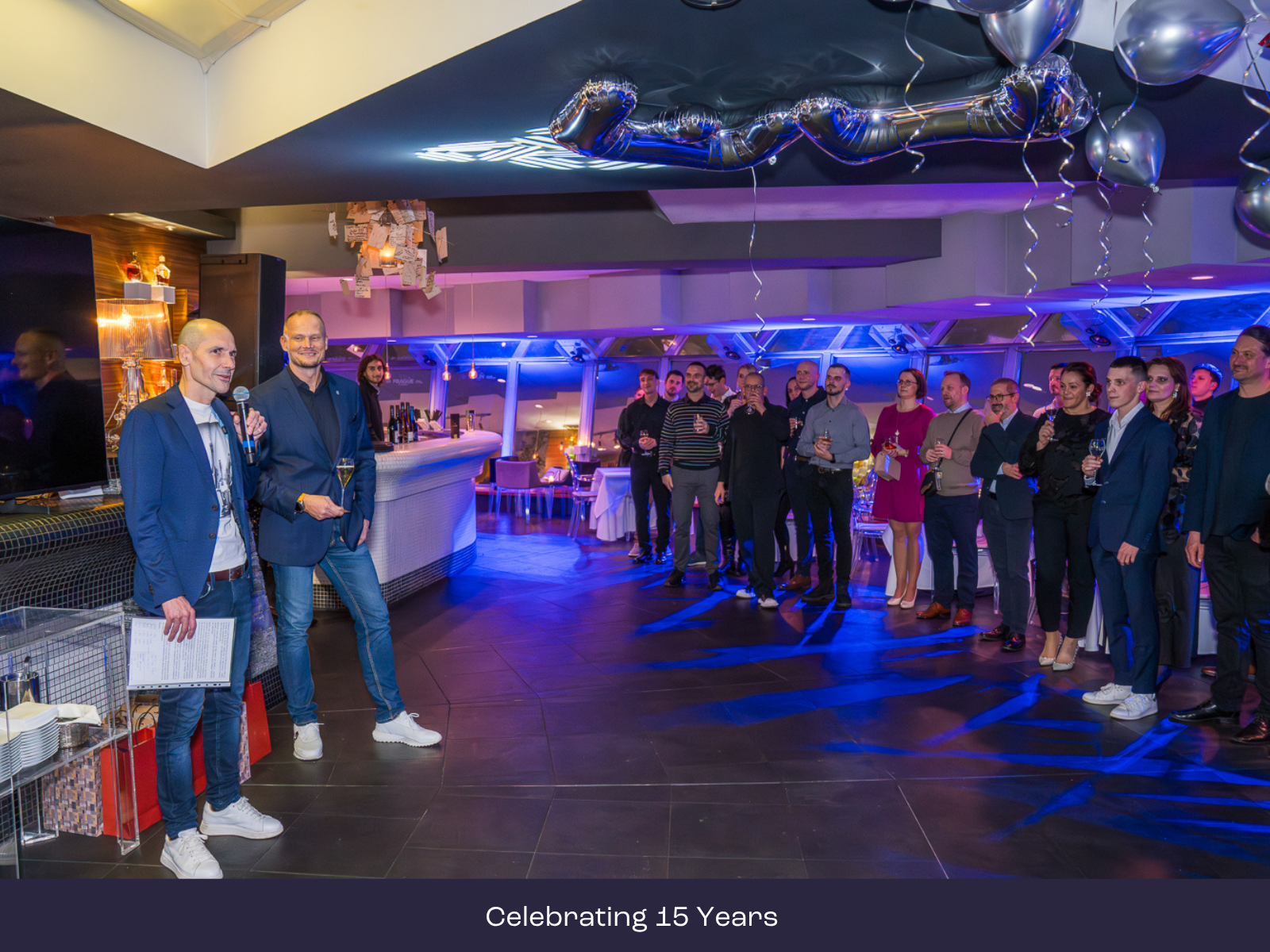
Last year, AEI celebrated its 15th anniversary. What does this milestone mean to you personally?
Braňo: To me, it’s proof that even when the beginnings are difficult, perseverance and the right people can build something that lasts. I also believe that in another fifteen years, AEI will be in a completely different place, creating an even greater positive impact than it does today.
Robo: For me, it’s also a great opportunity to look back and thank our colleagues, business partners, and our families. None of this would have been possible without them.
Your long-standing friendship has grown into a successful business partnership. Do you have a recipe for making it last?
Braňo: I think it’s like any good relationship—opposites attract. Robo and I simply found each other.
I don’t think it would be fair for us to pretend we have a formula for finding both a great friend and a great business partner. It simply happened, and we’re both incredibly grateful for it.
If I were to offer one piece of advice, though, it would be this: be a little less stubborn and a little more understanding. The world isn’t about any one of us individually—it’s about all of us. Living and working together is ultimately about compromise. Perhaps that mindset can help others find greater satisfaction in their professional lives as well.
Robo: Exactly. Braňo and I have completely different personalities, and that’s precisely our strength. I’m more impulsive, while Braňo is calmer and more thoughtful. We balance each other out, and I believe that’s the main reason why our friendship has lasted for almost thirty years—and why our business partnership has been successful for so many years as well.